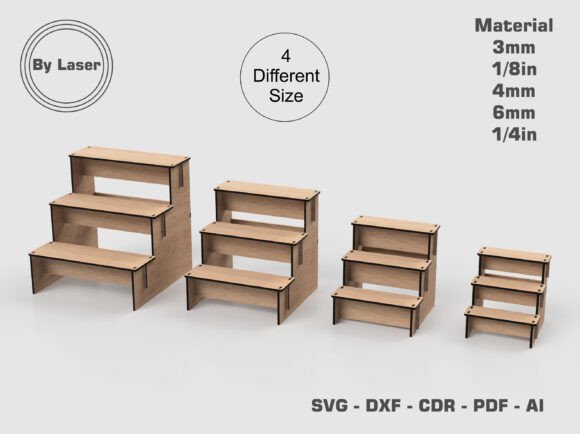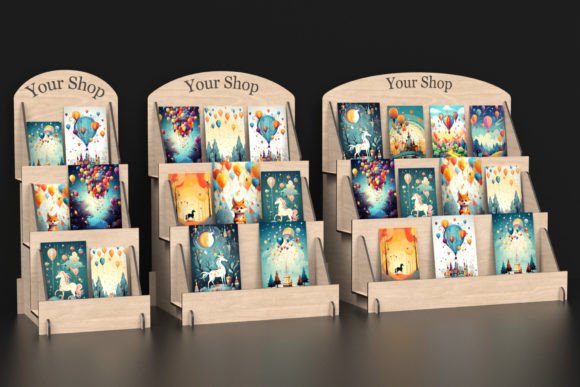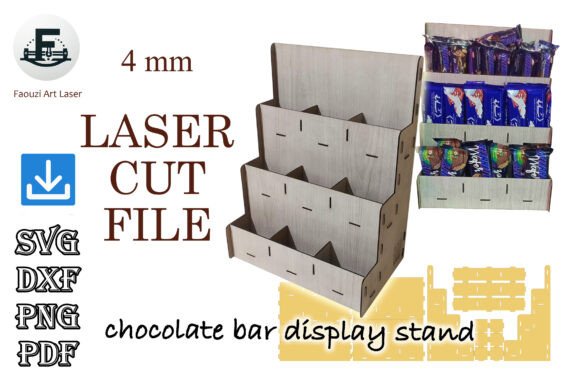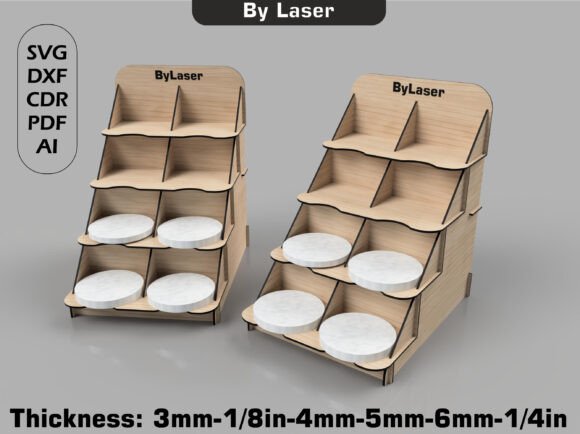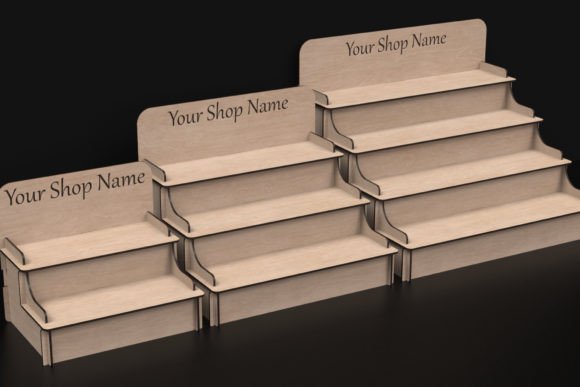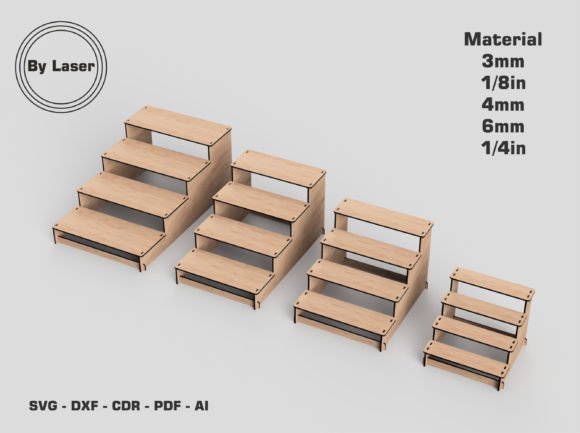
4 Shelf Counter Display Stand, Laser Cut Review
As a designer who has spent years stitching custom apparel and crafting boutique merchandise, I have learned to look past the marketing copy. When I first encountered the 4 Shelf Counter Display Stand, Laser Cut, my immediate reaction wasn't about the laser cutting technology itself, but rather how this specific shape would translate into a tangible embroidery project. It is rare to find a design that feels so structurally sound yet visually playful enough for a wide range of applications.
This isn't just a graphic; it is a layout that suggests organization, retail flair, and a touch of nostalgia. Before I committed to using it in a client's shop branding or a handmade gift line, I had to ask myself: does this design hold up under the needle? Can it survive the friction of daily wear on a tote bag or the tight curve of a cap? My experience suggests that while the Laser Cut File 4 Shelf Retail Counter Display Stand offers a unique aesthetic, its success depends entirely on how you approach the stitching process.
The First Impression: A Visual Anchor for Your Brand
The moment you lay out the design file, the personality of the 4 Shelf Counter Display Stand, Laser Cut comes through clearly. It evokes a mood of curated collections and thoughtful presentation. For an Etsy seller or a small business owner, this visual language is powerful. It immediately signals "product" and "display," making it perfect for items that are meant to showcase other goods or celebrate the act of selling.
I imagine this design not just as a logo, but as a central motif on a high-quality apron for a coffee shop owner or a patch for a vintage clothing boutique. The four-tier structure creates natural negative space that begs to be filled with thread. Unlike chaotic patterns, this design offers clean lines and defined sections. This clarity is crucial when translating a digital vector into a physical machine embroidery design. The layout allows for a balanced composition that works well on both large canvases like sweatshirts and smaller surfaces like baby onesies.
Real-World Application: From Sketch to Stitch
To truly understand the potential of this asset, let's walk through a realistic scenario. Imagine you are preparing a limited run of custom embroidered tote bags for a local craft fair. You want something that stands out on a table full of generic floral prints. You decide to use the 4 Shelf Counter Display Stand, Laser Cut as the focal point.
In this context, the design transforms from a simple graphic into a statement piece. You could stitch the shelves in a bold satin stitch to give them dimension, while filling the empty spaces with a subtle fill stitch pattern. When finished, the bag doesn't just carry groceries; it carries a story of craftsmanship. Customers at the fair would likely stop to admire the precision of the layers, associating the quality of the stitching with the quality of the products they might buy inside the bag.
This same logic applies to holiday gifts. A set of kitchen towels featuring the 4 Shelf Counter Display Stand could be personalized with names or dates, turning a functional item into a cherished keepsake. The design's structure mimics the idea of shelving, which makes it incredibly versatile for themes related to home organization, baking, or even nursery decor where it could represent a bookshelf or toy organizer.
Navigating Technical Challenges and Fabric Choices
However, every designer knows that a beautiful concept can fail if the technical execution is overlooked. The 4 Shelf Counter Display Stand, Laser Cut presents specific challenges that require careful planning. Because the design relies on distinct horizontal lines and vertical supports, it demands a stable fabric base. If you attempt to embroider this on a stretchy jersey knit without proper stabilizer, those crisp lines will waver, ruining the illusion of a sturdy stand.
I strongly advise testing this design on scrap fabric before committing to your final product. Pay close attention to the stitch density. Areas where the shelves intersect with the vertical posts may become too thick if the machine over-stitches, leading to puckering. This is particularly important when working with thin fabrics like tea towels or light cotton blends. In these cases, a cut-away stabilizer is non-negotiable to maintain the integrity of the embroidery file.
Furthermore, consider the placement on curved surfaces. While the design looks great on flat panels, applying it to a baseball cap requires extra caution. The curvature of the hat can distort the perspective of the shelves, making them appear uneven. If you are targeting custom apparel like caps, you must ensure the hoop size accommodates the curve without compressing the design too much. Similarly, dark fabrics require a higher contrast thread selection to ensure the details of the stand remain visible. A black-on-black application might look sleek, but it risks losing the definition of the individual shelves.
Where to Use With Caution
- Small Hoop Sizes: If the design includes tiny lettering or intricate corner details, a small hoop might force the stitches too tightly together, creating a muddy texture.
- Textured Fabrics: Rough materials like heavy denim or boucle can hide the fine lines of the Laser Cutting style design, making it look less refined.
- Frequent Washing: For items like work aprons that see heavy use, ensure the stitch density is high enough to prevent fraying, especially along the edges of the shelves.
Elevating Product Value and Customer Trust
In the world of handmade goods, the difference between a mediocre product and a premium one often lies in the details. Using a well-executed design like the 4 Shelf Counter Display Stand, Laser Cut elevates the perceived value of your finished product. When a customer sees a clean, professional-looking embroidery on a tote bag or a pillow cover, they trust the maker more. They assume that if the branding is this sharp, the product inside must be equally high quality.
This design also fosters brand consistency. Whether you are selling digital assets, printable mockups, or physical merchandise, having a signature element like this stand helps create a recognizable identity. It acts as a visual anchor that customers can associate with your shop. For commercial embroidery projects, this level of professionalism is essential for securing repeat business and building a loyal clientele.
Practical Designer Notes for Success
Before you hit the start button on your machine, there are several critical steps to take. First, review the stitch density. If the file seems too dense for your chosen fabric, adjust the settings to prevent bulkiness. Second, inspect the small details. Zoom in on the corners of the shelves to ensure they are clean and won't snag during wear.
Always test thread color contrast. A monochromatic scheme might look modern, but a multi-color approach can bring out the depth of the four-storey structure. Check whether the design works for both personal and commercial projects by reviewing the license terms provided with the Laser Cut File. If you plan to sell the finished items, you need explicit permission to do so.
Finally, compare light and dark fabric backgrounds in your mockups. Sometimes a design that looks perfect on white paper loses its impact on a navy blue shirt. By taking the time to simulate the final look, you can avoid costly mistakes and ensure that your embroidery project delivers exactly what you envisioned.
Ultimately, the 4 Shelf Counter Display Stand, Laser Cut is more than just a shape; it is a tool for storytelling. When stitched with care and consideration for the material, it becomes a centerpiece for your creative business, bridging the gap between digital design and tactile reality.