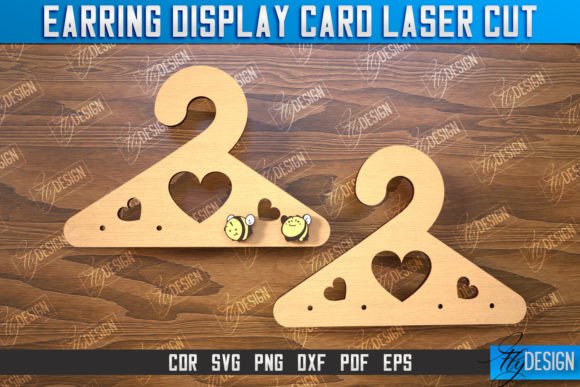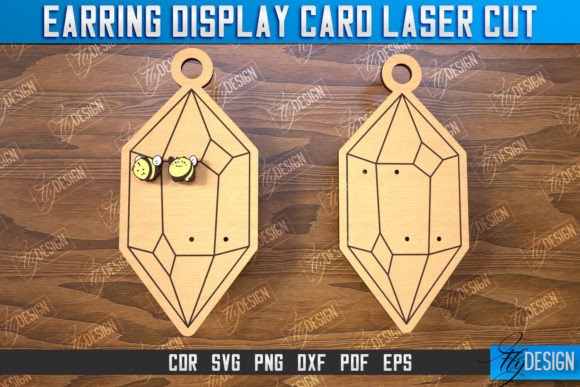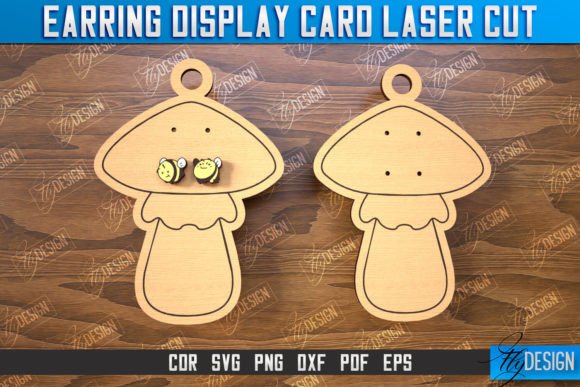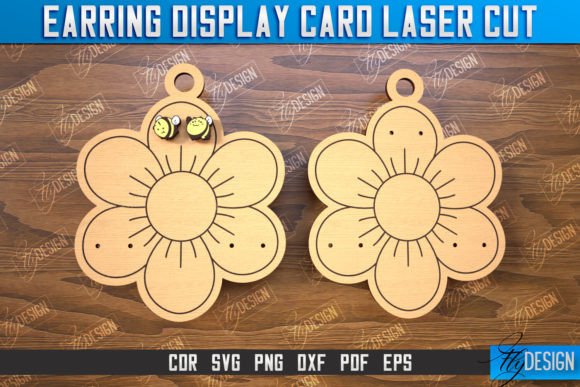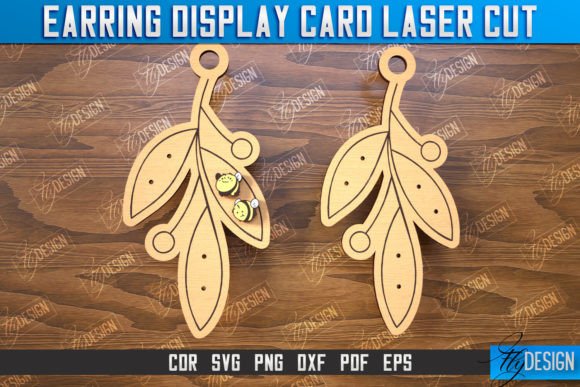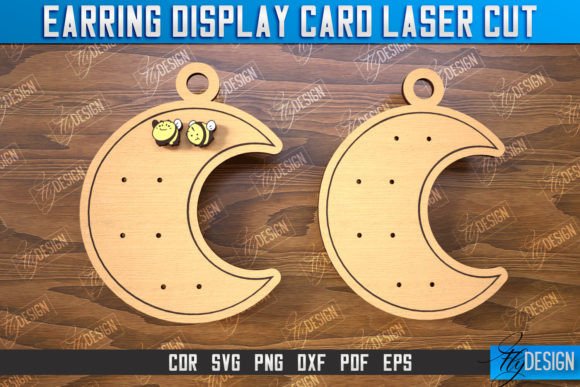
Moon Shaped Earring Display Review
As a designer who spends more time than I care to admit tweaking stitch density and testing thread contrast, I approach every new embroidery file with a mix of curiosity and skepticism. We have all seen designs that look stunning on a digital mockup but fall apart when the needle hits the fabric. Today, I am evaluating the Earring Display Moon Shaped Display, a design that claims to bridge the gap between functional jewelry presentation and decorative embroidery art. My goal here is not just to describe what it looks like, but to determine if this machine embroidery design holds up in real-world applications for craft business owners, Etsy sellers, and serious hobbyists.
The product description highlights its utility as a laser-cut shape, noting specific red lines for cutting and black lines for engraving. While this suggests a strong foundation in vector precision, my primary concern as an embroiderer is how these geometric elements translate into stitch patterns. Does the moon shape offer enough surface area for a clean fill stitch? Are the intricate details too fine for standard home machines? Let’s break down the visual personality and practical application of this design.
First Impressions and Visual Mood
When you first load the design into your software, the immediate takeaway is its elegant simplicity. The moon shape is not just a crescent; it carries a celestial, whimsical mood that resonates strongly with current trends in bohemian and minimalist aesthetics. For designers looking to create personalized gift items or boutique branding materials, this design asset offers a sophisticated backdrop without overwhelming the eye.
The layout feels balanced. Unlike some cluttered novelty designs, this piece relies on negative space effectively. This is crucial for handmade product creators because it allows the customer to focus on the quality of the stitching rather than getting lost in chaotic detail. The visual personality leans towards soft, dreamy, and high-end. It feels less like a cheap craft fair item and more like something you would find in a curated online shop specializing in custom apparel or nursery decor.
Real-World Application Scenarios
I recently considered using this design for a client project involving custom tote bags for a local jewelry maker. The idea was to create a branded packaging element—a reusable bag where the moon display serves as both a logo and a decorative motif. Here is how I see this embroidery project performing in various contexts:
- Tote Bag Design: This is perhaps the strongest use case. A large tote provides ample room for the full moon shape. When stitched onto canvas or heavy cotton, the stitch density can be adjusted to create a plush, textured look that adds perceived value to the bag. It turns a simple accessory into a statement piece.
- Sweatshirt Embroidery: For those venturing into apparel decoration, placing a smaller version of this design on the chest or back pocket of a sweatshirt creates a cozy, artistic vibe. The moon shape complements the soft texture of fleece or cotton blends beautifully, especially when paired with metallic threads for a subtle shimmer.
- Baby Embroidery: The gentle curves of the moon make it suitable for baby clothes, blankets, or nursery decor. However, caution is advised here. If the design includes tiny stars or detailed craters, they may become indistinct on small garments. I recommend scaling this down only if the machine can maintain clean edges.
- Embroidered Patch: Converting this into a detachable patch is a smart move for small shop products. You can attach it to denim jackets, caps, or hats. The distinct outline makes it easy to cut out after stitching if you choose an appliqué method, though a clean satin border is usually sufficient for a finished look.
Technical Considerations and Stitch Clarity
Not every design translates perfectly from screen to fabric. With the Earring Display Moon Shaped Display, there are specific technical aspects to monitor. The description mentions laser-cut precision, which implies sharp angles and smooth curves. In embroidery, sharp angles often require jump stitches or careful trimming, while smooth curves demand consistent satin stitch tension.
If the design utilizes fill stitch for the main body of the moon, ensure your hoop size is large enough to prevent distortion. Small hoops can stretch the fabric, causing the moon to appear slightly oval or warped. Additionally, inspect the thread colors carefully. A light-colored moon on white fabric will disappear, while a dark moon on black fabric might lose definition unless you use a contrasting outline or underlay.
One critical note: the description references laser cutting files (red for cut, black for engrave). If you are adapting this for embroidery, verify that the digitization accounts for thread pull. Sometimes, designs optimized for lasers do not automatically account for the physical displacement of fabric by thread. Always test the digital embroidery file on scrap material before committing to expensive fabrics.
Where to Use With Caution
While versatile, this design has limitations. Avoid using it on highly textured fabrics like thick wool or boucle, as the needle may struggle to penetrate evenly, leading to skipped stitches. Similarly, stretchy knits require a sturdy stabilizer to keep the moon shape from distorting during the sewing process.
Be wary of extremely small hoop sizes. If the design includes tiny decorative accents or fine text, these elements may blur together. For commercial embroidery projects where consistency is key, stick to medium to large formats. Also, consider the end-use of the product. Items that undergo frequent washing, such as aprons or kitchen towels, should be tested for colorfastness and stitch durability. Over time, dense fill stitches can snag, so a protective top stabilizer or proper finishing is recommended.
Impact on Branding and Customer Trust
In the world of creative entrepreneurs, presentation is everything. Using a well-executed design like the Earring Display Moon Shaped Display signals professionalism. It shows customers that you care about the details. When a buyer sees a crisp, well-stitched moon on a tote bag or a personalized gift, it builds trust in the quality of your work. It elevates the finished product from a generic commodity to a unique, handmade treasure.
This design also lends itself well to printable mockups. Before producing inventory, you can place the design on digital templates of bags, shirts, and boxes to visualize the final result. This helps in marketing your Etsy listings or social media campaigns, allowing potential buyers to see exactly how the embroidery project will look in their hands.
Practical Designer Notes
Before you start stitching, follow these steps to ensure success:
- Test on Scrap Fabric: Never skip this step. Test the design on the exact fabric and stabilizer combination you plan to use for the final product.
- Check Thread Contrast: Ensure the thread colors provide enough contrast against the background fabric. Light-on-light or dark-on-dark can look muddy if not executed perfectly.
- Review Stitch Density: Look at the digitization. Is the density appropriate for the fabric weight? Too dense, and the fabric will pucker; too sparse, and the fabric may show through.
- Confirm Licensing: Since this product originated as a laser-cut file, double-check the license terms for commercial embroidery use. Some vendors restrict resale of digital assets or finished goods made from them.
- Inspect Small Details: Zoom in on the design. Are any lines too thin to be embroidered reliably? If so, consider simplifying the design or increasing the scale.
In conclusion, the Earring Display Moon Shaped Display is a versatile and aesthetically pleasing addition to any designer’s library. It bridges the gap between functional display and decorative art, making it ideal for custom apparel, gift items, and boutique branding. By paying attention to stitch quality, fabric choice, and licensing, you can turn this digital asset into a profitable and beautiful handmade product.